
A woman in black athletic wear exercising, representing physical vitality through hormone replacement therapy

Hormone Optimization In Hamburg

Fast appointments (self payers or privately insured patients only)

Online doctor consultations and testing at our office in Berlin Prenzlauer Berg

On-demand coaching from doctors for your current problems, needs and healthspan goals.

Anticipation Is The Key To Prevention

Post-menopause accounts for one-third of a woman's life, which is about 33 years based on an average menopause age of 51 and an EU life expectancy of 84. Additionally, women can experience perimenopausal symptoms for as long as 10 years. This means approximately half of a woman's life can be affected by various symptoms that diminish both quality of life and productivity.

Individuals undergoing HRT (Hormone Replacement Therapy) often describe the experience as “feeling like themselves again.” Therefore, finding the optimal treatment frequency and dosage represents a crucial investment in one's well-being for the upcoming 30-40 years.

Here is a basic guide to help identify which hormone might be deficient:

  • Low Progesterone: Can lead to feelings of anxiety, irritability, and being overly stimulated.
  • Low Estrogen: May cause sensations of dryness, heat, and tearfulness.
  • Low Testosterone: Can result in feelings of fatigue, weakness, and a lack of motivation.

It is important to remember that each woman experiences symptoms with varying degrees of intensity. Hormones can have overlapping or synergistic effects. Addressing and resolving these symptoms is typically a gradual and repetitive process.
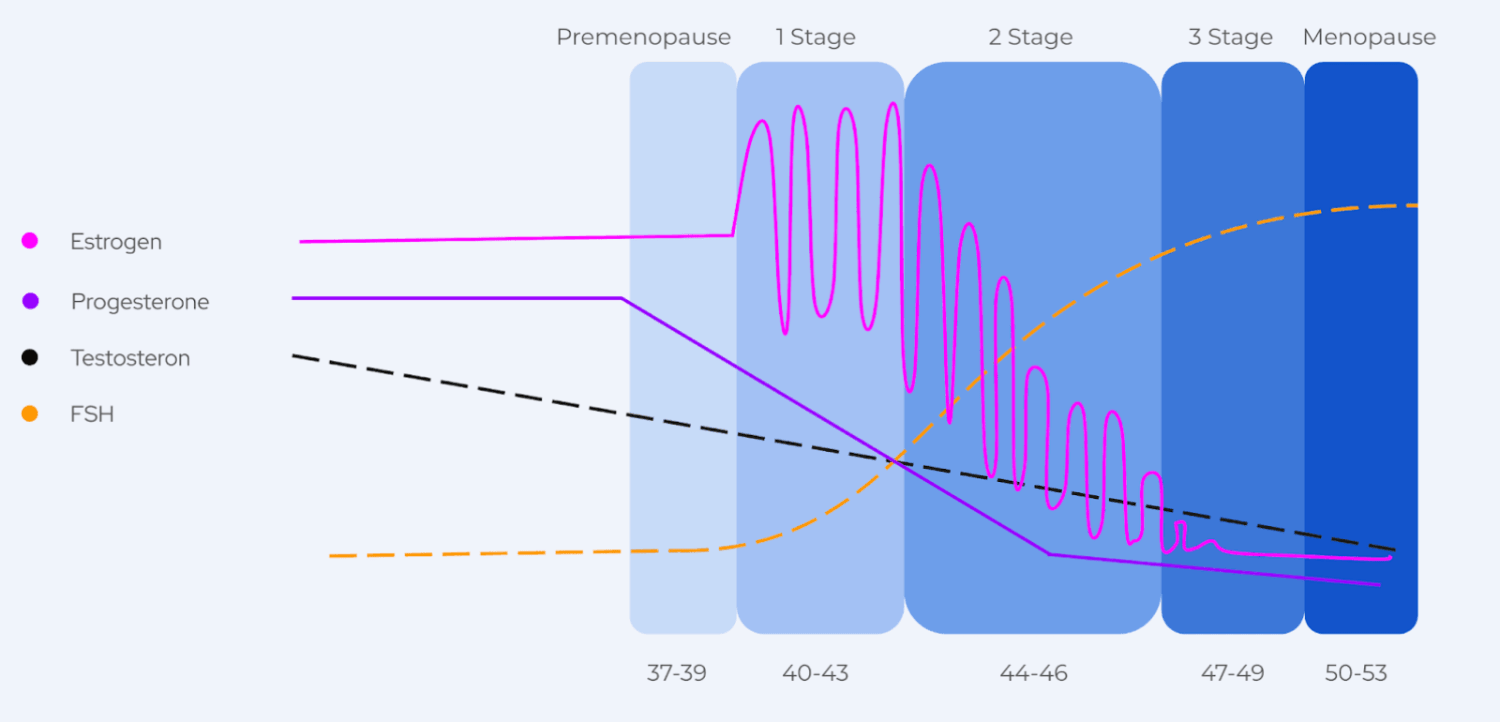

A medical graph showing fluctuating estrogen and testosterone levels managed by hormone replacement therapy
A woman meditating cross-legged in a bedroom, highlighting the mental wellness focus of hormone replacement therapy.

How Hormonal Imbalances Manifest Across The Body

  • Sleep: Insufficient Progesterone disrupts sleep and causes nighttime awakenings (due to the loss of GABA's calming influence); low Estrogen leads to night sweats and waking up early.
  • Mood: A deficit in Progesterone can result in irritability and anxiety; low Estrogen is associated with depression and anhedonia; inadequate Testosterone diminishes motivation and assertiveness.
  • Menstrual Cycle: Inadequate Progesterone leads to heavy and irregular periods (from unopposed estrogen); a lack of Estrogen causes shorter or missed cycles.
  • Vasomotor Symptoms: A deficiency in Estrogen is the main cause of hot flashes and night sweats.
  • Libido & Sexual Function: Insufficient Estrogen results in vaginal dryness and discomfort; low Testosterone is the main reason for decreased spontaneous desire and less intense orgasms.
  • Cognitive Symptoms: A lack of Estrogen can lead to "brain fog" and memory issues; insufficient Testosterone impairs strategic thinking and mental focus.
  • Metabolism: Low Estrogen encourages the accumulation of abdominal fat and contributes to insulin resistance; a deficiency in Testosterone leads to a reduction in lean muscle, which slows the metabolic rate.
  • Skin & Hair: A deficit in Estrogen diminishes collagen and skin elasticity; low Testosterone may play a role in thinning hair.
  • Bone & Muscle: Insufficient Estrogen is a significant factor in the development of osteoporosis and sarcopenia; inadequate Testosterone lessens physical endurance and muscle power.
  • Urogenital Health: A deficiency in Estrogen can cause Genitourinary Syndrome of Menopause, characterized by atrophy, itching, and recurrent UTIs.

An Overview Of A Potential Treatment Plan

HRT is a responsive, step-by-step process customized to your individual biological needs. In contrast to a fixed prescription, your physician will modify doses and schedules according to blood work and symptom monitoring. The typical approach involves stabilizing one hormone prior to adding another, with follow-up appointments scheduled every 3–6 months.


  • Progesterone (Oral Micronized): Derived from plants, bioidentical progesterone is readily absorbed. Its advantages include safeguarding the uterine lining, balancing other hormones, alleviating anxiety, and enhancing sleep. The standard protocol involves 100mg–200mg taken at night (as it can cause sleepiness). Women in perimenopause generally take it in the latter half of their cycle (days 14–28), while those with erratic cycles and post-menopausal women take it daily.
  • Estradiol (Transdermal): Applying estrogen through the skin with gels or patches is a safer alternative to oral forms. Whereas oral estrogen can increase blood clot risk by four times, research (such as the BMJ 2019 study) indicates that transdermal application does not carry this elevated risk because the hormone enters the bloodstream directly. Gels are often used at the start for easy dose adjustment, and it generally takes 4–8 weeks of regular application to notice a reduction in symptoms.
  • Transdermal Testosterone: While testosterone can improve libido and energy levels, formulas made for women are not widely available outside of Australia. The dose is kept very low (approx. 300mcg/day), since higher amounts can lead to acne or unwanted hair growth.
  • Dehydroepiandrosterone (DHEA): This is occasionally used as a hormonal precursor, though oral DHEA produces variable results. It is important to know that vaginal DHEA is intended for treating localized atrophy and not for systemic hormone replacement.
  • Medical Supervision: Any form of HRT must be prescribed and monitored by a qualified medical professional.
A healthcare professional in a white blouse providing expert hormone replacement therapy guidance in a modern office.
Abstract pink and blue swirling textures symbolizing complex biological changes during hormone replacement therapy.

The Timeline For Hormone Replacement Therapy (HRT) Effectiveness

  • First Few Weeks A slight easing of symptoms, like better sleep, mood, or energy, may be observed. This varies depending on which hormone is initiated. Progesterone tends to work more quickly, whereas Estradiol requires a minimum of 2 to 4 weeks for initial effects to become apparent. This is the period for establishing your routine, including when, how, and where to apply the treatment.
  • 1 to 3 Months The dosage is evaluated during this period, as the therapy is adjusted based on your specific symptoms. If symptoms return, the dose is increased. If you experience breast tenderness or migraines, we may reduce the estrogen level. Ideally, your mood swings begin to level out and your energy improves. The frequency of symptoms like hot flashes or night sweats should diminish.
  • 3 to 6 Months This timeframe is when most individuals report substantial relief, as transdermal Estradiol and Testosterone require some time to become fully effective. Hot flashes, night sweats, and vaginal dryness frequently show marked improvement, and mood fluctuations occur far less often.
  • 6 to 12 Months You experience the complete benefits of the therapy and see a notable enhancement in your quality of life. You also learn that adjustments are still possible and can modify the dosage or method of administration as needed.
  • Month 13 Onwards Over the long term, further advantages build up, such as stronger bones (which lowers osteoporosis risk) and improved cardiovascular health, contributing to your well-being as you age. Keep in mind that these benefits are most effective when combined with strength training, a nutritious diet, and adequate protein consumption.

Next Steps

At The Longevity Practice, our emphasis is on detecting risks prior to their evolution into health issues by using early and accurate diagnostics. Rather than responding to illness, we develop transparent, individualized strategies for preserving long-term health. We aim to provide each patient with a thorough knowledge of their own body and actionable steps for today. By prioritizing prevention and clarity, we guide patients toward constructing a longer, healthier existence.

Discover if our methodology is a good fit for you. Arrange your consultation online and Schedule an appointment

Evidence-based Longevity In Hamburg

In our practice, we rely exclusively on evidence-based methods and medical diagnostics that have been scientifically proven to make a difference. Our focus is on preventing the “four horsemen” of aging—cardiovascular disease, cancer, metabolic dysfunction, and neurodegeneration—rather than offering trends like epigenetic age tests or wellness drips. Our Prevention strategy addresses tailored exercises, nutrition, sleep, mental health and if necessary support by supplement and medication.
Banner Image

Cost Of A Hormone Replacement Therapy Focus Session In Hamburg

The cost for a Hormone Replacement Therapy Focus Session is based on the German healthcare pricing system (GOÄ – Gebührenordnung für Ärzte). We encourage you not to stop at consultation alone, but to begin your full Longevity Journey with us. Here is what our protocol looks like:

Hormone Replacement Therapy Focus Session
199€
Goal: Conduct a comprehensive hormone panel and risk-benefit analysis to develop a personalized HRT protocol and targeted treatment strategy.
Duration: 45 minutes
Full Diagnostic Visit
1,399€
Goal: Establish a data-driven biological baseline to unlock personalized peak performance and long-term health optimization.
Duration: 3 hours
Introduction Session
0€
Schedule a quick video call to learn more about The Longevity Practice services and approach.
Duration: 15 minutes

Testimonials

What our customers say about us

Julia, 46 – HRT & Strength
When I saw how much muscle mass I had lost, I finally understood why I felt weaker. It took longer than I expected to get my hormone levels properly adjusted, but once they were stable, my sleep and daily energy improved dramatically. Combining this with regular strength training has made me noticeably stronger and more resilient in everyday life.
Anna, 44 – HRT & Sleep
I never realized how much my hormones were affecting my sleep until I have taken progesterone. After adjusting my therapy and tracking my sleep for six weeks, I went from waking up four or five times a night to sleeping through almost every night. It’s such a relief to finally wake up feeling rested and ready for the day.
Pia, 45 – Menopause & Brain Fog
I thought I was losing my mind. I’d forget simple words in the middle of sentences. Realizing it was just the estrogen drop was a huge relief.
Anna, 49 – Menopause & Sleep
The night sweats were brutal—I was waking up drenched and exhausted every single night. I was so irritable with my family. Once I balanced my hormones, I finally got my sleep back.
Anita, 54 – Menopause & Anxiety
Nobody told me about the sudden heart palpitations and anxiety. I felt on edge for no reason. Learning it was hormonal made so much sense.