
Woman smiling in natural sunlight representing wellness during perimenopause and menopause

Perimenopause & Menopause Consultation In Potsdam

Fast appointments (self payers or privately insured patients only)

Online doctor consultations and testing at our office in Berlin Prenzlauer Berg

On-demand coaching from doctors for your current problems, needs and healthspan goals.

A Proactive Approach to Health

By 2030, 1.2 billion women are projected to reach menopause, a figure rising to 1.65 billion by 2050. Preceding this stage, 60-80% of women between the ages of 34 and 51 encounter perimenopausal symptoms that diminish their quality of life and work performance. These symptoms can include everything from sleep issues to cognitive difficulties, anxiety, and reduced energy levels. Frequently, these conditions remain undiagnosed and unaddressed. The consequences affect families and create a substantial economic burden through missed workdays, absenteeism, and women departing from their careers.

The underlying cause is a decline in hormones. In addition to reproductive organs like the uterus, ovaries, and breast, women possess Estrogen (ER) and androgen (AR) receptors throughout the body—in the brain, liver, kidneys, fat tissue, bones, and immune cells. These receptors play a role in regulating functions spanning from bone density and metabolic processes to reproduction, cognitive abilities, and emotional state.

Consider them the essential "building blocks" of the system. The three primary hormones are:

  • Progesterone, also known as "the calm regulator": A decrease in this hormone can lead to disturbed sleep, anxiety, and unusually heavy menstrual bleeding.
  • Estrogen, often called "the main character": A reduction in estrogen can affect cognitive function, causing memory problems and concentration difficulties, or diminish quality of life through joint discomfort and vasomotor symptoms like night sweats and hot flashes.
  • Testosterone, or "the drive booster.": A drop in testosterone levels can impact motivation, sex drive, and lean muscle mass.
Smiling woman in black sweater representing perimenopause and menopause care
Chart showing estrogen, progesterone, testosterone and FSH hormone changes across perimenopause stages to menopause

Comparing Perimenopause And Menopause

Perimenopause

Frequently referred to as “the second puberty,” this stage is the multi-year period that precedes the final menstrual cycle.

  • Age of Onset: Generally begins at age 34 or later.
  • Definition: A transitional period initiated by diminishing ovarian function.
  • Duration: Usually continues for a period of 4 to 10 years.
  • Menstrual Cycle: Periods become unpredictable; they can be lighter, heavier, shorter, or longer, and some may be missed altogether.
  • Hormone Levels: Progesterone levels are the first to drop, estrogen fluctuates erratically, and testosterone shows a gradual decline. A diagnosis is typically made based on symptoms, not bloodwork.
  • Fertility: Pregnancy is still possible; continuing with your chosen method of birth control is advisable.
  • Key Symptoms: Includes sleep disturbances, tiredness, hot flashes, night sweats, mood fluctuations, anxiety, cognitive fog, joint pain or stiffness, muscle soreness, vaginal dryness, reduced libido, and symptoms of depression.

Menopause

Menopause refers to a distinct moment that signifies the conclusion of a woman's reproductive phase.


  • Age of Onset: Commonly happens around the age of 51 (with a typical range of 45 to 55).
  • Definition: A precise milestone defined as 12 months in a row without a menstrual period.
  • Duration: It is a singular event. The period that comes after this point is called Postmenopause.
  • Menstrual Cycle: Ceases entirely.
  • Hormone Levels: Hormone levels stabilize at a new, consistently low baseline.
  • Fertility: Pregnancy is no longer possible.
  • Key Symptoms & Risks: Certain symptoms like hot flashes and vaginal dryness can continue. There is a heightened risk of bone density loss (osteoporosis), along with an increased risk of dementia and Alzheimer’s disease in individuals who do not use Hormone Replacement Therapy (HRT).

Symptoms And Hormonal Shifts Of Perimenopause And Menopause

  • Sleep Problems (50–55%): Encompasses insomnia, waking often during the night (WASO), and sleep that is not refreshing. This is caused by fluctuating progesterone levels (which impact GABA receptors) and low estrogen that leads to night sweats. A reduction in melatonin after age 40 exacerbates the problem.
  • Low Energy and Fatigue (~80%): Estrogen helps manage cortisol and maintain mitochondrial health. When it declines, it results in metabolic stress and a decrease in cellular energy, which frequently happens in conjunction with poor sleep.
  • Joint & Muscle Pain (65%): A decrease in estrogen boosts pro-inflammatory cytokines, which causes widespread inflammation and less joint lubrication, resulting in stiffness or conditions like "frozen shoulder".
  • Brain Fog (60%): Neurons need estrogen to effectively use glucose for energy. Falling estrogen levels lead to a "hypometabolic" condition in the brain's memory areas (the hippocampus), which compromises concentration.
  • Hot Flashes & Night Sweats (50–55%): Estrogen plays a role in regulating the hypothalamus, the body's internal thermostat. A drop in estrogen can cause the brain to wrongly sense that the body is too hot, which sets off abrupt cooling mechanisms.
  • Anxiety & Irritability (50–60%): Falling estrogen levels decrease the production of serotonin (the "happiness hormone"), and lower progesterone lessens the brain's natural calming effect, resulting in heightened reactivity and mood fluctuations.
  • Abdominal Weight Gain (50%): A reduction in estrogen can lead to increased insulin resistance. The body intentionally accumulates visceral fat around the abdomen in an effort to generate estrone (an estrogen type) from these fat cells.
  • Vaginal Dryness & Pain (40%): Diminished estrogen levels decrease blood flow, collagen, and elasticity within the pelvic tissues, which can cause atrophy and painful intercourse (dyspareunia).
  • Low Libido (40–45%): This is caused by a significant drop in testosterone levels between the ages of 45 and 55, along with the physical discomfort and tiredness resulting from low estrogen.
  • Depressive Symptoms (40–45%): During perimenopause, the likelihood of developing new-onset depression rises by 2 to 4 times because of how estrogen affects the density of serotonin receptors in the brain.
  • Dry Skin & Urinary Problems (35–45%): These issues stem from the same reduction in collagen, moisture retention, and tissue elasticity that impacts the vaginal tissues.
Woman in her 40s experiencing perimenopause or menopause symptoms, wearing turquoise sweater in natural light
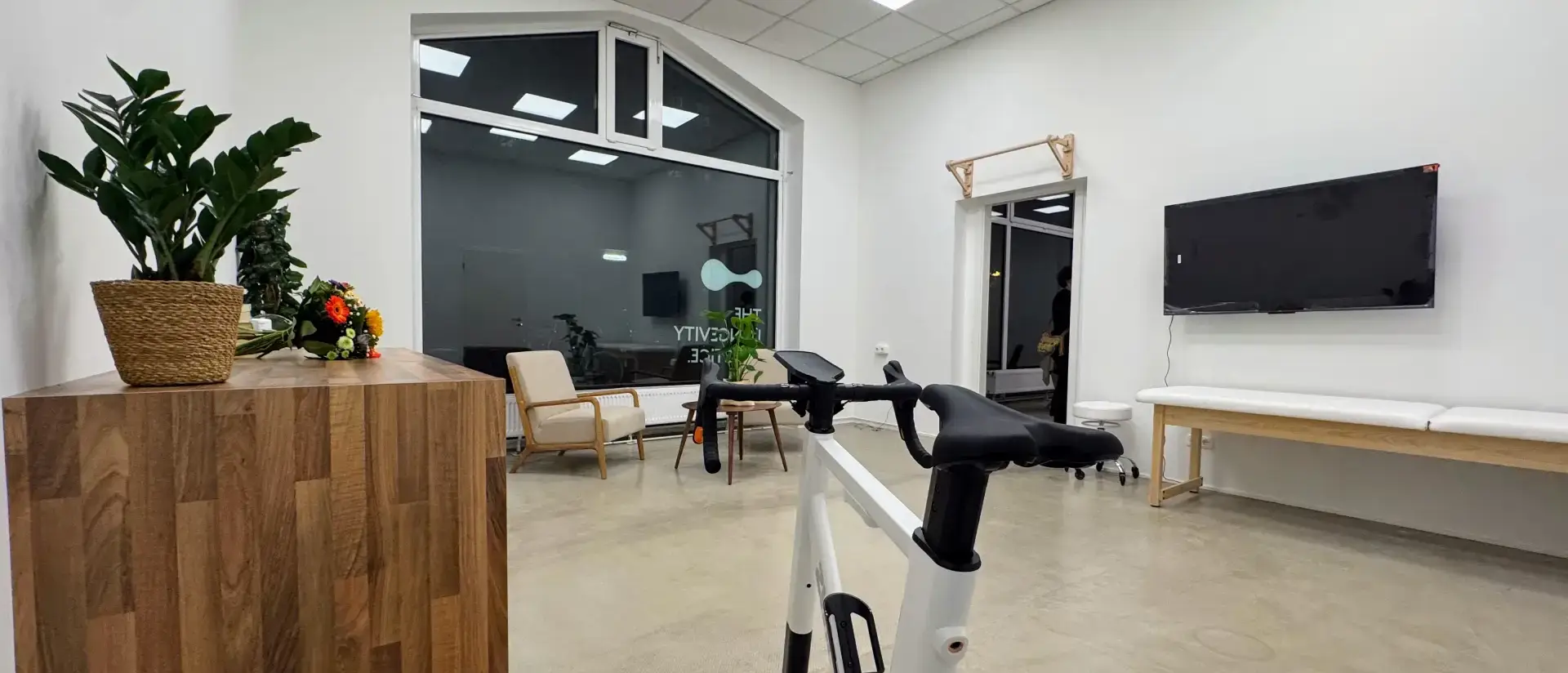
Modern menopause and perimenopause clinic, The Longevity Practise, with patient consultation space and wellness equipment

The Longevity Practice Philosophy And How To Begin

Here at The Longevity Practice, our emphasis is on using early and accurate diagnostics to identify health risks before they develop into problems. We proactively design clear, individualized plans for long-term health maintenance, rather than simply reacting to illness. We aim to provide each patient with profound insight into their own body and actionable steps for immediate implementation. By centering our approach on prevention and clarity, we guide patients in constructing a longer, healthier existence.

Our Core Principles

Our main objective is to assist individuals in feeling optimal at every stage of life and to support their pursuit of a longer, healthier lifespan. To accomplish this, our work is centered around several key principles:

  • Scientific Accuracy
  • Individualized Care
  • A Proactive Stance
  • Clear Direction
  • Extended Wellness
  • Honesty and Trust

Note: Our methodology is built around sustainable and non-invasive options. We adhere to these fundamental principles to facilitate enduring physiological improvements and effective long-term health strategies.

Next Steps

Discover if our methodology is a good fit for your needs. Book your consultation online and Schedule an appointment

Evidence-based Longevity In Potsdam

In our practice, we rely exclusively on evidence-based methods and medical diagnostics that have been scientifically proven to make a difference. Our focus is on preventing the “four horsemen” of aging—cardiovascular disease, cancer, metabolic dysfunction, and neurodegeneration—rather than offering trends like epigenetic age tests or wellness drips. Our Prevention strategy addresses tailored exercises, nutrition, sleep, mental health and if necessary support by supplement and medication.
Banner Image

Cost Of Perimenopause And Menopause Focus Session In Potsdam

The cost for a Perimenopause and Menopause Focus Session is based on the German healthcare pricing system (GOÄ – Gebührenordnung für Ärzte). We encourage you not to stop at consultation alone, but to begin your full Longevity Journey with us. Here is what our protocol looks like:

Perimenopause and Menopause Focus Session
199€
Goal: Assess menopausal stage and symptom profile to evaluate disease risk associated with hormonal decline and determine optimal clinical interventions.
Duration: 45 minutes
Full Diagnostic Visit
1,399€
Goal: Establish a data-driven biological baseline to unlock personalized peak performance and long-term health optimization.
Duration: 3 hours
Introduction Session
0€
Schedule a quick video call to learn more about The Longevity Practice services and approach.
Duration: 15 minutes

Testimonials

What our customers say about us

Pia, 45 – Menopause & Brain Fog
I thought I was losing my mind. I’d forget simple words in the middle of sentences. Realizing it was just the estrogen drop was a huge relief.
Anna, 49 – Menopause & Sleep
The night sweats were brutal—I was waking up drenched and exhausted every single night. I was so irritable with my family. Once I balanced my hormones, I finally got my sleep back.
Anita, 54 – Menopause & Anxiety
Nobody told me about the sudden heart palpitations and anxiety. I felt on edge for no reason. Learning it was hormonal made so much sense.
Julia, 46 – HRT & Strength
When I saw how much muscle mass I had lost, I finally understood why I felt weaker. It took longer than I expected to get my hormone levels properly adjusted, but once they were stable, my sleep and daily energy improved dramatically. Combining this with regular strength training has made me noticeably stronger and more resilient in everyday life.
Anne, 44 – HRT & Sleep
I never realized how much my hormones were affecting my sleep until I have taken progesterone. After adjusting my therapy and tracking my sleep for six weeks, I went from waking up four or five times a night to sleeping through almost every night. It’s such a relief to finally wake up feeling rested and ready for the day.