Biological age (“Biologisches Alter”) has become one of the biggest topics in modern longevity medicine. Social media is full of claims about reversing aging, lowering biological age, and slowing cellular aging through supplements, fasting, cold exposure, and expensive testing kits.
The idea is appealing. Two people can both be 45 years old chronologically while having very different levels of cardiovascular fitness, metabolic health, recovery, and disease risk.
But here is the reality:
Most biological age tests currently available are far more confident than the science actually allows.
At The Longevity Practice, we take a more evidence-based approach to healthy aging. Rather than focusing heavily on abstract longevity scores, we focus on measurable biomarkers strongly linked to long-term healthspan, prevention, and physical resilience.
And among those biomarkers, few matter more than VO2max.
Chronological age is simply the number of years you have been alive.
Biological age attempts to estimate how well your body is functioning internally compared to your actual age. In theory, biological age reflects:
This is why some people feel physically older at 40 while others remain highly energetic and resilient well into later decades.
The concept itself makes sense.
The challenge is measurement.
Many biological clock tests claim to measure aging through:
Some of these technologies are scientifically interesting, especially in aging research.
But currently, there is still no universally accepted biological age test that can reliably predict:
This is the part often missing online.
A biological age report may tell someone they are “older” biologically than expected. But it rarely explains:
At The Longevity Practice, we believe longevity medicine should focus on actionable physiology rather than chasing abstract scores.
If there is one longevity biomarker consistently supported by research, it is cardiovascular fitness.
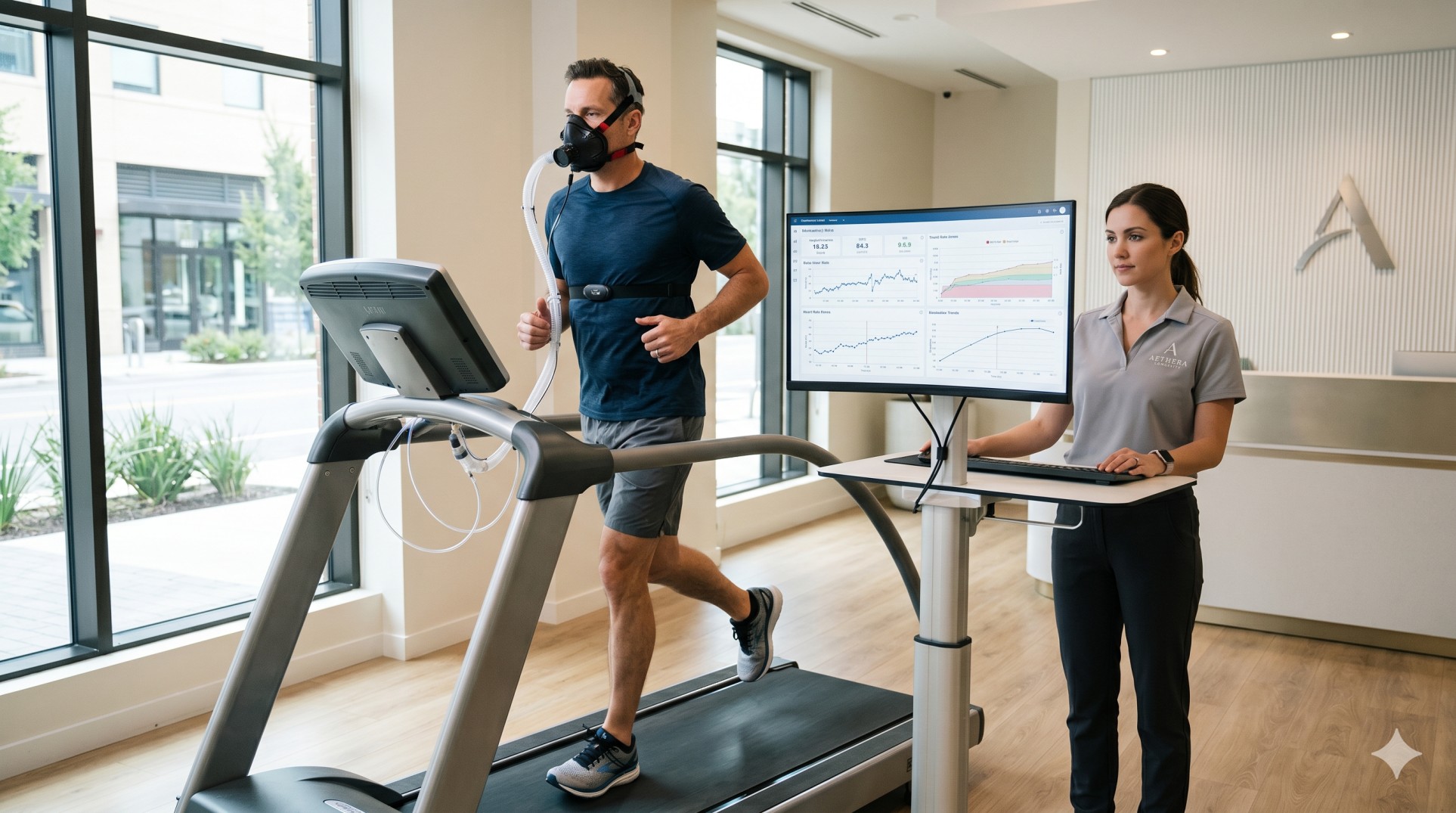
VO2max measures how efficiently your body uses oxygen during exercise. It reflects how well your heart, lungs, blood vessels, and muscles work together to produce energy.
A low VO2max is strongly associated with:
A higher VO2max is associated with healthier aging and improved long-term healthspan.
This is one reason VO2max testing is such an important part of evidence-based longevity medicine at TLP.
Unlike many biological age tests, VO2max is:
Most evidence-based longevity strategies are surprisingly simple.
The strongest research consistently points toward foundational health behaviors.
Structured aerobic exercise and interval training can significantly improve VO2max, recovery, and metabolic health.
Strength training supports:
Poor sleep negatively affects:
Weight gain, visceral fat accumulation, insulin resistance, and chronic inflammation are strongly associated with accelerated biological aging.
Micronutrient deficiencies may contribute to:
None of these interventions are trendy.
But these are the same systems repeatedly associated with healthy aging and increased healthspan in long-term research.
At The Longevity Practice, we focus on measurable, evidence-based longevity biomarkers rather than trend-driven optimization scores.
Depending on the patient, this may include:
The goal is not to promise unrealistic age reversal.
The goal is to help patients better understand their physiology, identify risks early, and improve long-term function and resilience.
Because healthy aging is rarely about one dramatic intervention.
It is usually the result of consistently improving multiple systems over time.
The science around biological age and cellular aging is evolving rapidly. Epigenetic clocks and biological age testing may eventually become more clinically useful as research improves.
But today, many biological age tests still create more confusion than clarity.
The strongest foundations of longevity remain surprisingly consistent:
They may not sound as exciting as modern longevity marketing.
But they remain the interventions with the strongest clinical evidence behind them.

 EN
EN
 DE
DE

