
The conversation surrounding GLP-1 receptor agonists like Ozempic, Wegovy, and Mounjaro has dominated headlines. While the media often focuses on rapid weight loss, the medical reality is far more nuanced. At The Longevity Practice, we are examining these medications through a different lens. We are asking how these agents relate to health span, cardiovascular protection, and metabolic stability.
The effectiveness is indeed impressive, as the figure below shows:
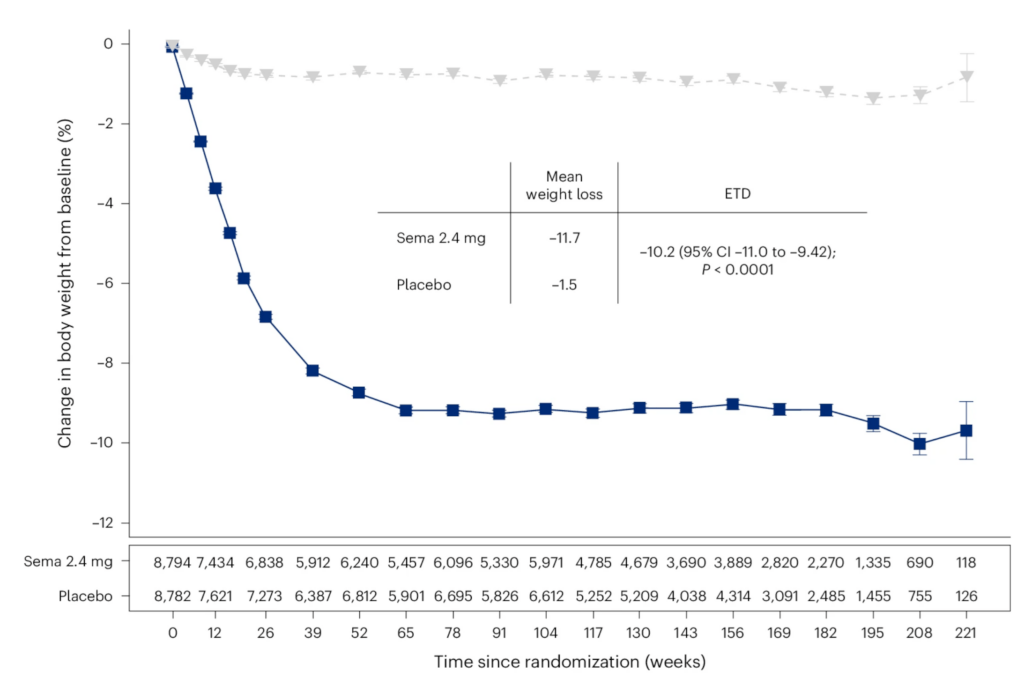
Source:: Ryan et al. Nat Med. Jul 2024.
However, this is not just about a number on a scale. It is about understanding the physiology of these drugs and applying them with precision.
To appreciate the potential of these medications, it is necessary to understand their biological targets. GLP-1 (glucagon-like peptide-1) agonists were originally developed to manage Type 2 diabetes by mimicking a naturally occurring hormone.
These drugs engage with multiple organ systems to regulate metabolism:
The newer generation of medications, such as Tirzepatide (Mounjaro/Zepbound), are dual agonists. They target both the GLP-1 and GIP receptors, which appears to result in more potent weight reduction and metabolic improvement compared to single-receptor agonists.
For some time, the medical community debated whether the heart benefits observed in patients taking GLP-1s were simply a byproduct of weight loss. The logic was that if a patient loses weight, their blood pressure and lipid profiles naturally improve.
However, recent analyses of the SELECT trial have challenged this assumption. This large-scale study followed over 17,000 adults with overweight or obesity who did not have diabetes. The data showed that Semaglutide reduced the risk of major adverse cardiovascular events, such as stroke or heart attack, by 20%.
Critically, new breakdowns of this data suggest that these cardiovascular benefits might indeed be independent of the amount of weight lost. Even patients who did not experience significant weight reduction saw protective benefits for the heart. This suggests that GLP-1 agonists may have direct cardioprotective properties, perhaps by reducing inflammation or improving arterial function, distinct from their impact on adiposity.
Standard medical guidelines for these medications typically involve a rapid escalation of dosage to maximize weight suppression. At The Longevity Practice, we often advocate for a different therapeutic strategy sometimes described as “microdosing”.
Microdosing involves initiating treatment at doses significantly lower than standard recommendations. For example, one may start a client on 1.25mg of tirzepatide (Mounjaro), rather than the standard starting dose of 25 mg. This dosage would then be used for longer periods than the standard ramping up stages.
This approach serves several medical reasons:
1. Enhancing Tolerability: Gastrointestinal side effects, such as nausea and bowel irregularities, are the most common reasons patients discontinue therapy. By titrating the dose upward very slowly, we allow the body to adapt, thereby minimizing adverse events and improving long-term adherence.
2. Prioritizing Metabolic Correction: At lower doses, these agents can often improve insulin sensitivity and stabilize blood glucose levels without inducing drastic appetite suppression. This is particularly relevant for women navigating hormonal transitions like perimenopause or PCOS, where the goal is metabolic balance rather than rapid weight reduction.
3. Preserving Natural Satiety: The goal is not to eliminate hunger entirely but to regulate it. Microdosing supports mindful eating habits and prevents the development of food aversions that can occur at higher doses.
A significant concern regarding GLP-1 agonists is the potential loss of muscle mass. Clinical data indicates that approximately one-third of the weight lost with these medications is lean mass, while two-thirds is fat mass. It is important to note that this ratio is comparable to what is seen with other weight loss interventions, including caloric restriction and bariatric surgery (surgery of the stomach).
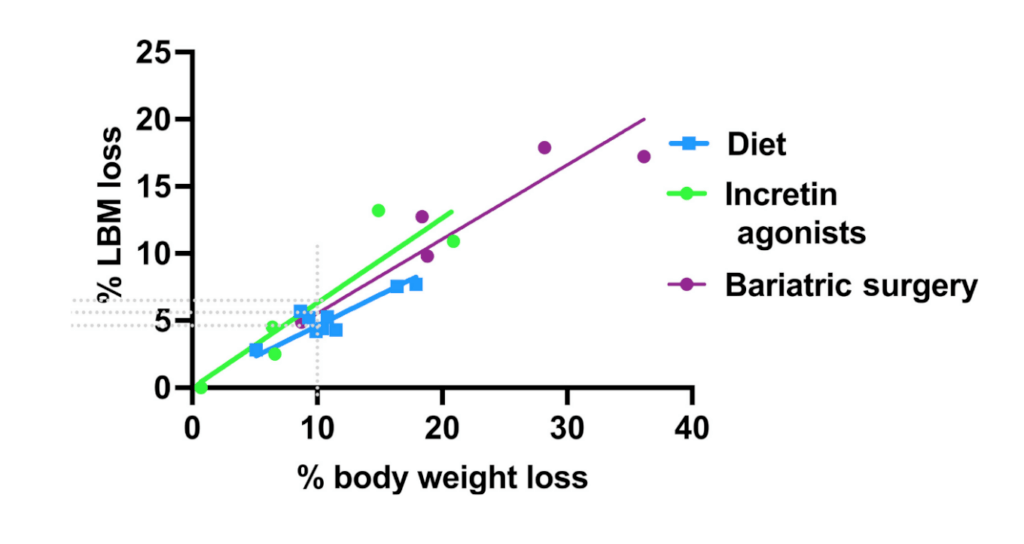
Source:: Neeland et al. DOM Journal. Jun 2024
However, muscle mass is a primary driver of longevity. Additionally, muscle mass increases the metabolic rate as they are using the energy (calories). Losing this metabolically active muscle mass makes it therefore much harder to stay at a lower weight as energy consumption has gone down as well.
To counteract this loss, two lifestyle factors are considered non-negotiable components of the treatment plan:
Patients who combine GLP-1 therapy with resistance training and proper nutrition are better able to improve their body composition by losing fat while preserving vital muscle. Patients who exercised appropriately were able to regain much less weight when stopping GLP-1 Agonist and not rebound to their old weight than those who do not exercise.
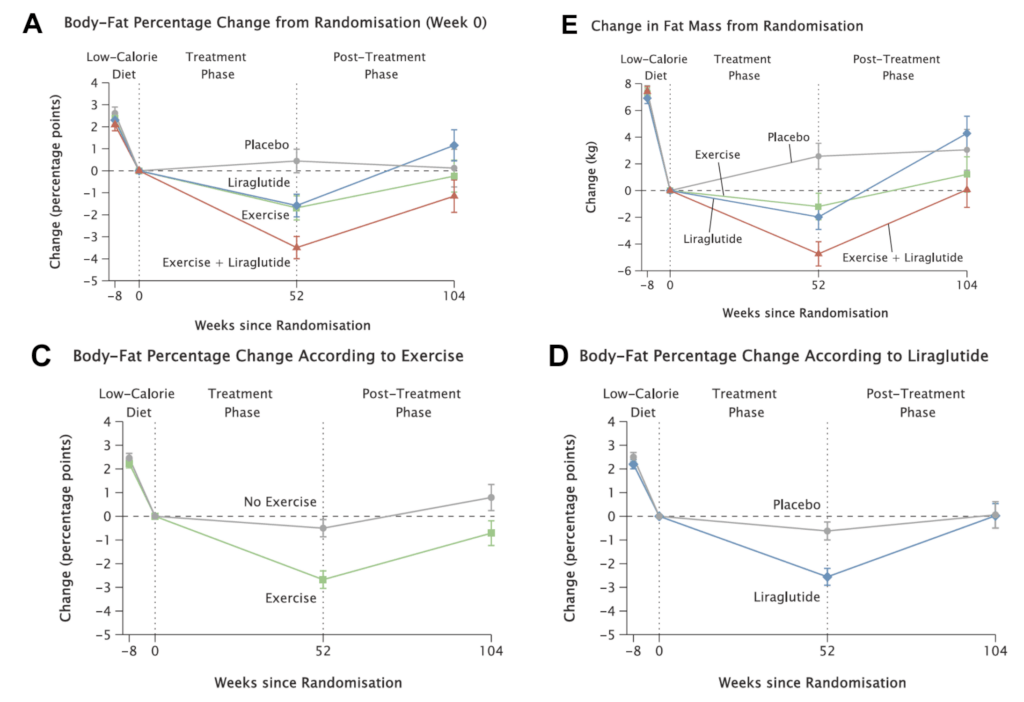
Source:: Jensen et al. EClinicalMedicine. Feb 2024.
While many people buy these drugs online for self-experimentation, there is a high risk of 'wasting away' (and losing important muscle mass!) and regaining the weight after the drug is discontinued. Therefore, we strongly advise using these drugs in coordination with a physician to monitor nutrition, muscle mass, and other biological parameters that can be altered.
These medications represent a significant advancement in metabolic medicine, but they are not a standalone solution. We categorize GLP-1s as a tool within a broader framework for healthy aging.
We rely on the "Longevity Equation" to guide our practice:
Longevity = Fitness + Sleep + Nutrition + Emotional Health + Targeted Medicine.
GLP-1 agonists can effectively address metabolic dysfunction and reduce "food noise," providing a stable foundation for patients to implement these lifestyle changes. When used responsibly and holistically, they become a powerful asset in the pursuit of a longer, healthier life.
Disclaimer: This information is for educational purposes only and is not intended to diagnose, treat, or prevent any medical condition. Consult with a doctor before making any changes especially if you have existing health conditions or concerns.
Citations:
Jensen, S. B. K., et al. (2024). Healthy weight loss maintenance with exercise, liraglutide, or both combined: A secondary analysis of a randomized clinical trial. EClinicalMedicine, 69, 102475. https://doi.org/10.1016/j.eclinm.2024.102475
Lincoff, A. M., et al. (2023). Semaglutide and cardiovascular outcomes in obesity without diabetes. The New England Journal of Medicine, 389(24), 2221–2232. https://doi.org/10.1056/NEJMoa2307563
Neeland, I. J., et al. (2024). Changes in body composition with glucagon-like peptide-1 receptor agonists: A systematic review and meta-analysis. Diabetes, Obesity and Metabolism. Advance online publication. https://dom-pubs.pericles-prod.literatumonline.com/doi/10.1111/dom.15728
Ryan, D. H., et al. (2024). Long-term weight loss effects of semaglutide in obesity without diabetes in the SELECT trial. Nature Medicine, 30(7), 2026–2035. https://www.nature.com/articles/s41591-024-02996-7
Saraiva, F. K., & Sposito, A. C. (2014). Cardiovascular effects of glucagon-like peptide 1 (GLP-1) receptor agonists. Cardiovascular Diabetology, 13, 142. https://doi.org/10.1186/s12933-014-0142-7

 EN
EN
 DE
DE

